Figure 10:2. Anonymous artist, Medallion with Saint John the Evangelist from an Icon Frame, twelfth century Byzantine, gold, silver, and enamel worked in cloisonne, 8.3 cm in diameter, The Metropolitan Museum of Art, New York City. You Might Also Like Figure 9:5. Artist unknown, Siapo mamanu, 1890s, tapa bark cloth and painted pigment, 137 x 127 cm., Museum of New Zealand Te Papa Tongarewa FE000825. January 27, 2026 Figure 11:2. Huang Tingjian, Biographies of Lien P’o and Lin Hsiang-ju (detail), c. 1095, handscroll, ink on paper, 33.7 × 1840.2 cm, The Metropolitan Museum of Art, New York City. January 27, 2026 Figure 9:2. Hei tiki, nineteenth century, pounamu (nephrite jade with abalone inlay), 15.5 x 7.6 cm, The Metropolitan Museum of Art, New York City. Hei tiki pendants were often worn in honour and acknowledgement of figures of one’s whakapapa, or ancestral lineage. January 27, 2026 Leave a Reply Cancel reply Save my name, email, and website in this browser for the next time I comment.
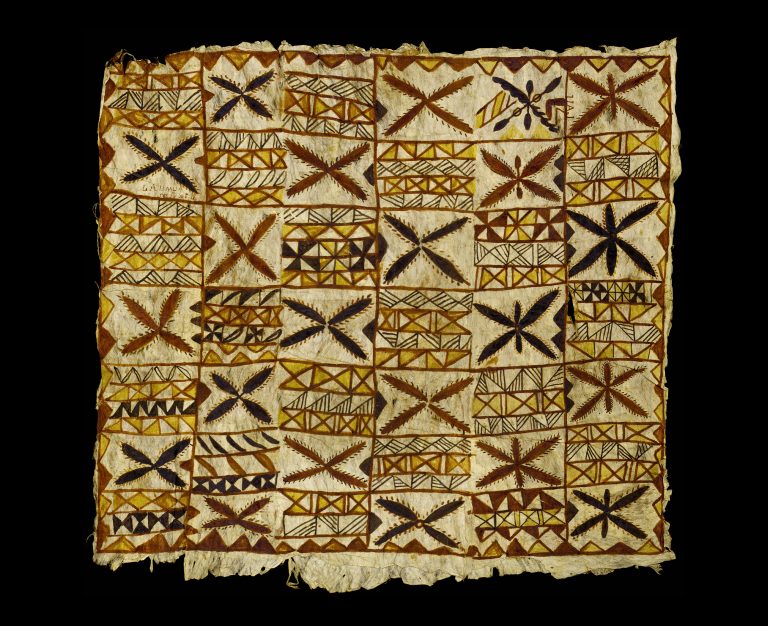
Figure 9:5. Artist unknown, Siapo mamanu, 1890s, tapa bark cloth and painted pigment, 137 x 127 cm., Museum of New Zealand Te Papa Tongarewa FE000825. January 27, 2026
Figure 11:2. Huang Tingjian, Biographies of Lien P’o and Lin Hsiang-ju (detail), c. 1095, handscroll, ink on paper, 33.7 × 1840.2 cm, The Metropolitan Museum of Art, New York City. January 27, 2026
Figure 9:2. Hei tiki, nineteenth century, pounamu (nephrite jade with abalone inlay), 15.5 x 7.6 cm, The Metropolitan Museum of Art, New York City. Hei tiki pendants were often worn in honour and acknowledgement of figures of one’s whakapapa, or ancestral lineage. January 27, 2026