
Ai Weiwei set the bar for contemporary Chinese artists. Born in 1957, he experienced both the dark years of the Cultural Revolution and the promise of Beijing’s economic rebirth. Working from studios in Beijing, New York, and Berlin, he has developed a cosmopolitan body of work known around the globe. His projects challenge viewers: Han dynasty treasures smashed or recycled as Coca-Cola vessels; porcelain oil slicks disrupting our ecological comfort zones; visitors as human rights activists at Alcatraz penitentiary. Ai’s works have contested questions of what art is, what it is for, what artists do, and what spectators do. They also maintain threads of social justice and moral conscience that enrich so much Chinese art.
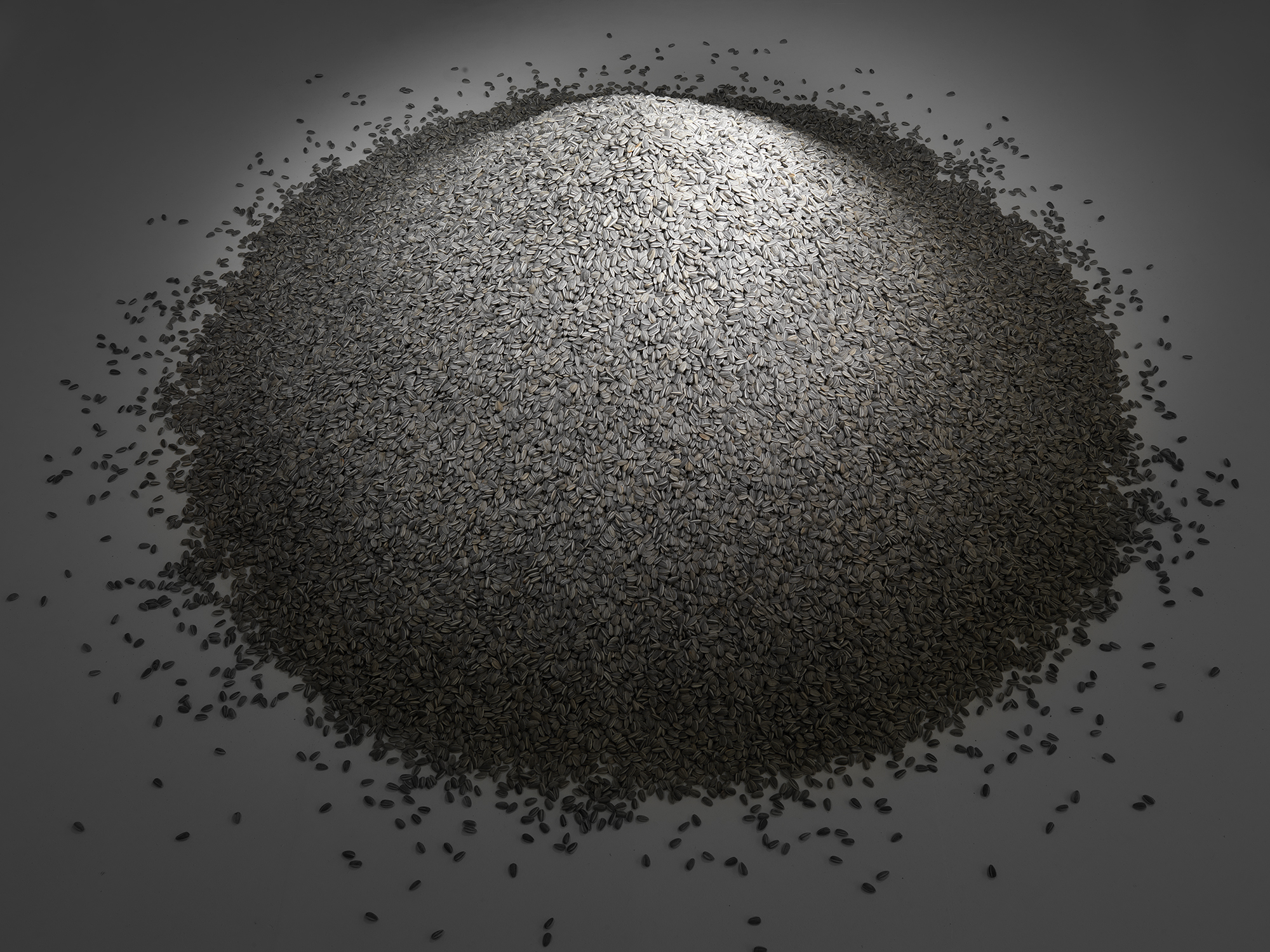
London’s Tate Modern gallery was developed in an old power station. In 2010 Ai Weiwei filled its 1000 square metre turbine hall with 100 million ‘sunflower seeds.’ Each seed was handcrafted, fired, painted and refired by 1600 specialists in the kilns of the old Imperial porcelain centre of Jingdezhen. The sunflower is important in the People’s Republic of China. It is a symbol of abundance, even in times of famine. In the darkest days of the Cultural Revolution, and still today, its seeds provide cooking oil, and a cheap, available shared snack; a symbol of common ground. The sunflower was a symbol of the people – Maoist posters often pictured human faces on sunflowers turning to face the ‘sun’ of the Great Helmsman himself. The image resonates Mao’s own words during the ‘Hundred Flowers Movement’ of 1955 and1956: “Let a hundred flowers bloom; let a hundred schools of thought contend.” Ai’s father was freed from prison during this campaign – though his moment of freedom was all too brief. Ai himself was arrested a year after the sunflower seeds exhibition. His work challenged viewers to join the dots between the sunflower seed metaphor, his people, their timeframes and cultures, philosophies and moral codes.